
CONCEPTS
Science concept library
Read about the principles behind the experiments. Explore each concept’s meaning, key relationships, examples, and conditions, then test your understanding in a related experiment.
Find concepts by subject
Browse 147 concepts by subject, then try the related experiments.

Physics: 24 concepts
Force and motion, waves, electricity and magnetism, light. Check the rules by which the world operates through simulation.
View all concepts →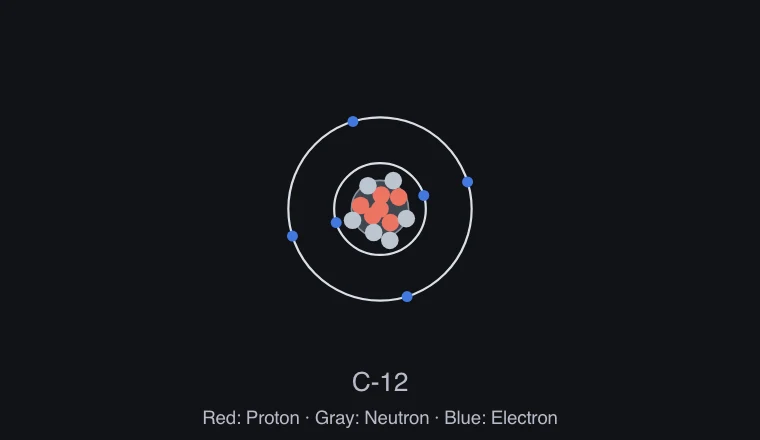
Chemistry: 20 concepts
Atoms and molecules, chemical reactions, acids and bases. You can safely mix even dangerous reagents.
View all concepts →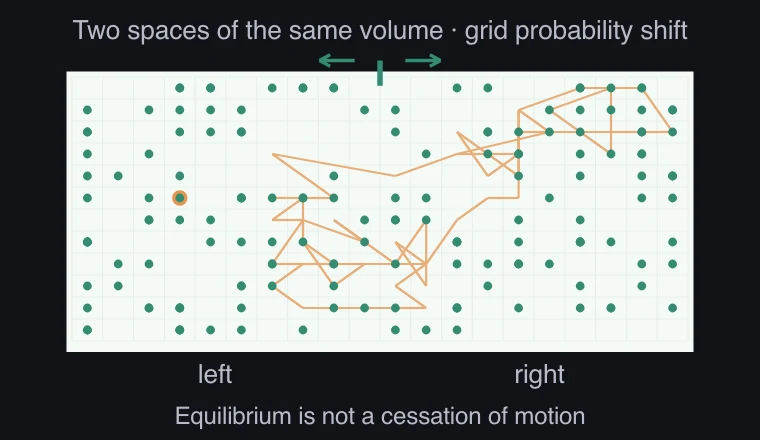
Biology: 20 concepts
Cells, genetics, ecosystem, our body. Observe invisible life phenomena.
View all concepts →
Earth science: 20 concepts
Plate tectonics, weather, phases of the moon, planetary motion. View the large flow of the Earth and the universe in miniature.
View all concepts →
Electronics: 30 concepts
Circuits, semiconductors, signals and logic. Measure current and voltage to explore electronic circuits.
View all concepts →
Energy & Environment: 10 concepts
Explore generation, heat, storage and grids by measuring energy conversion and losses.
View all concepts →
Mechanical Engineering: 12 concepts
Machines, structures, fluids and control. Measure forces and deformation to explore engineering design.
View all concepts →
Computing: 12 concepts
Explore algorithms, data, networks, and AI through visible computation and verification.
View all concepts →How to use these guides
- Choose a concept and read its definition in the opening paragraph.
- Read the key relationships, symbols, units, and conditions together.
- Use the example to make a prediction, then change one condition at a time in a related experiment.
- Compare the experiment’s results with the explanation and explain any differences.