
CONCEPTS / CHEMISTRY
Chemistry concepts
Explore the principles, key relationships, examples, and model limits in chemistry, then test them in related experiments. These 20 concepts connect to 20 experiments.
All chemistry experiments →Atom, ion, bond
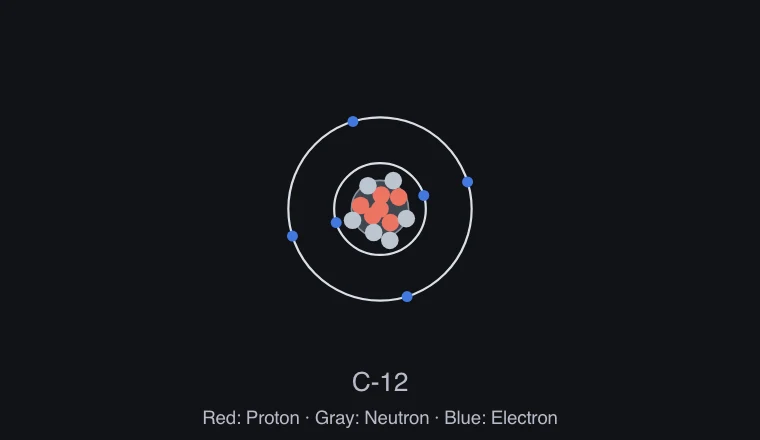
Atomic structure and isotopes
The number of protons determines the element, and the number of neutrons determines the isotope. It is necessary to distinguish between the mass number and the actual atomic mass.
Read the concept →
Ions and electron transfer
When an atom loses or gains electrons, it becomes an ion while maintaining the same number of protons. Try to connect the direction of electron movement with the sign of the charge.
Read the concept →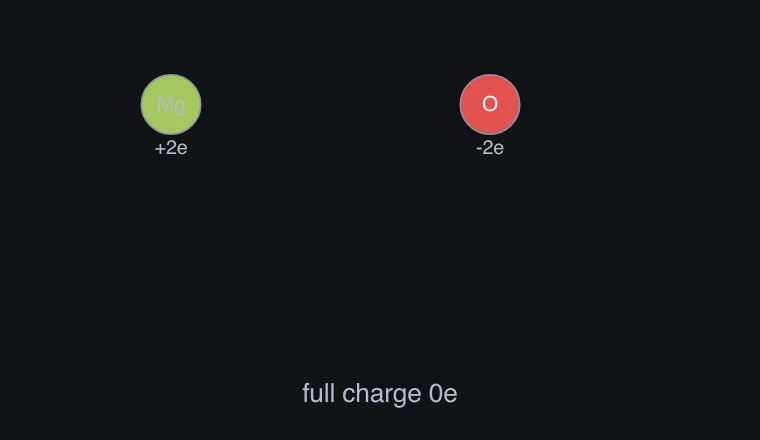
Ionic bonding and whole-number ratios in formulas
The chemical formula for ionic compounds represents the simplest ratio of ions with opposite charges that neutralize each other.
Read the concept →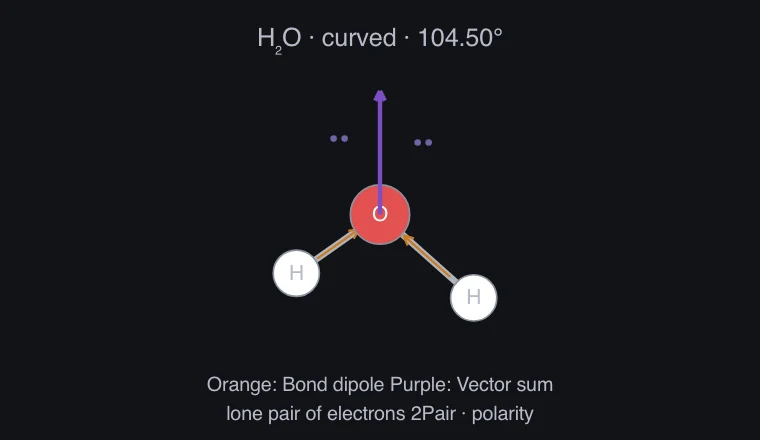
Molecular geometry and polarity
The polarity of a molecule depends not only on the polarity of the bonds, but also on the spatial arrangement. Even if a molecule has polar bonds, it can be nonpolar if the arrangement is symmetrical.
Read the concept →Solution·Solubility

Molar concentration and dilution
Dilution lowers concentration by adding solvent while keeping the amount of solute, in moles, unchanged. Use the final solution volume, rather than the volume of added solvent, in the equation.
Read the concept →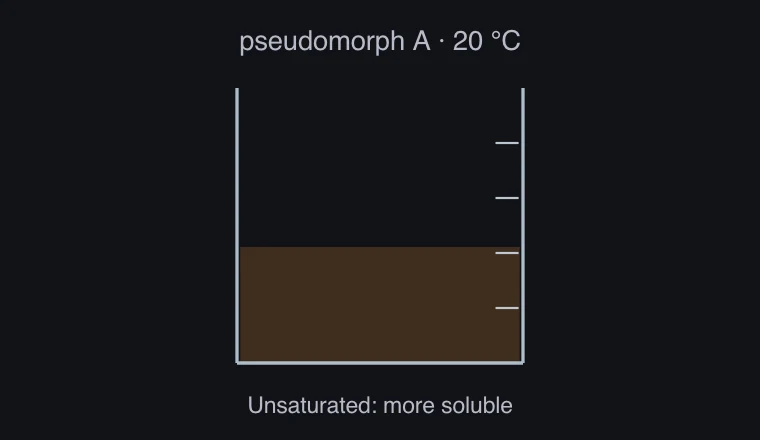
Solubility and saturated solutions
Solubility refers to the amount of solute that can dissolve in a given solvent under specific conditions. Be sure to differentiate between saturation concentration and the actual amount dissolved.
Read the concept →
Cooling crystallization and crystal yield
Cooling a solution prepared by dissolving solute at a higher temperature can produce crystals as solubility falls. Some solute remains dissolved after cooling.
Read the concept →acid/base
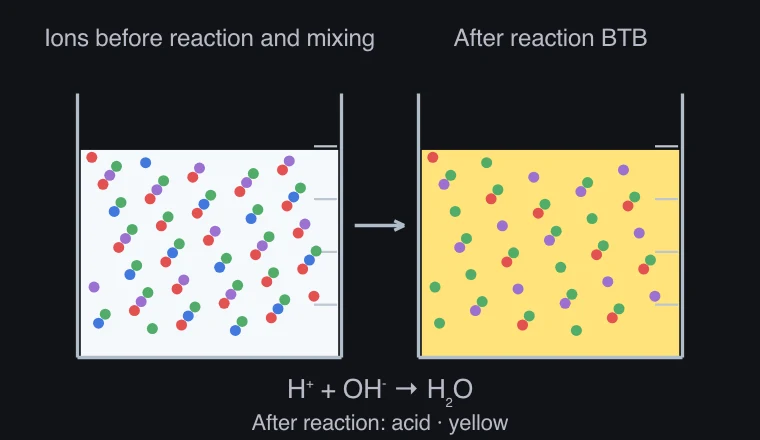
Acid–base neutralization and mole ratios
Neutralization requires comparing the amounts, in moles, of acid and base that react. Mixing equal volumes alone does not ensure a neutral solution.
Read the concept →
Acid strength and acid concentration
Acid strength describes the tendency to dissociate; concentration describes the amount of acid in a solution. Strong versus weak and concentrated versus dilute are different distinctions.
Read the concept →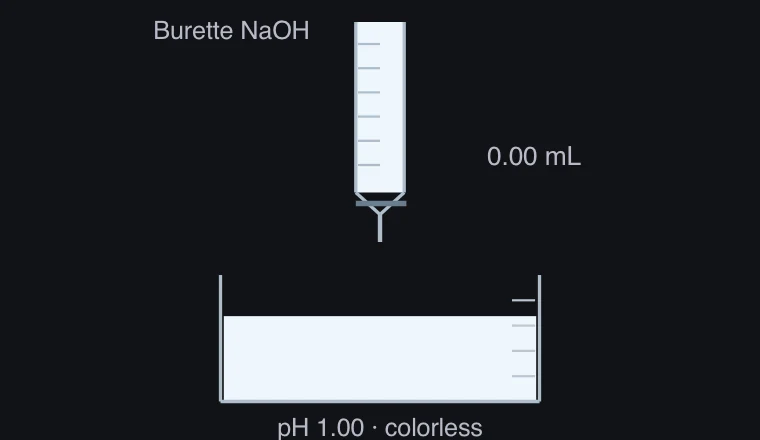
Acid–base titration and the equivalence point
Titration uses the reacting amount of a solution of known concentration to determine an unknown amount in another solution. Distinguish the equivalence point from an indicator’s endpoint.
Read the concept →Reaction equation/quantitative relationship

Chemical equations and conservation of atoms
The coefficients in a chemical equation are determined so that the number of atoms of each element is the same before and after the reaction. Changing the chemical formula of the substance results in a different reaction.
Read the concept →
Limiting reactants and reaction extent
The limiting reagent is the substance that is present in the smallest amount relative to the stoichiometric ratio of the reaction. This is not simply the substance with the smallest mass or fewest moles.
Read the concept →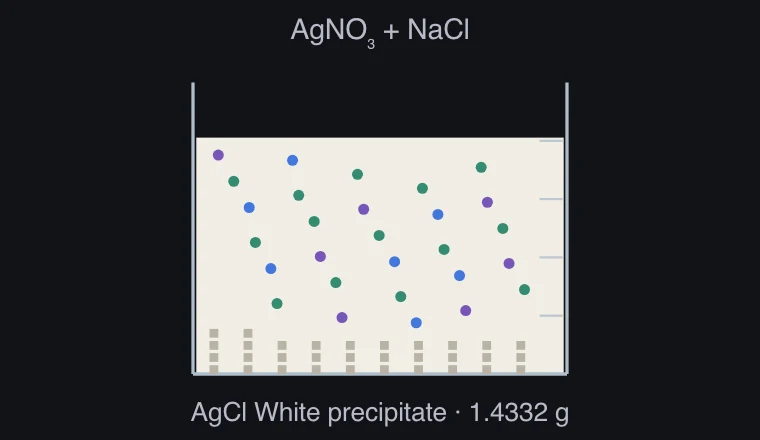
Precipitation and net ionic equations
The reaction where two solutions are mixed, resulting in the formation of a substance that does not dissolve well, is referred to as precipitation. The amount produced is determined by the molar ratio of the reaction ions.
Read the concept →Reaction speed/equilibrium
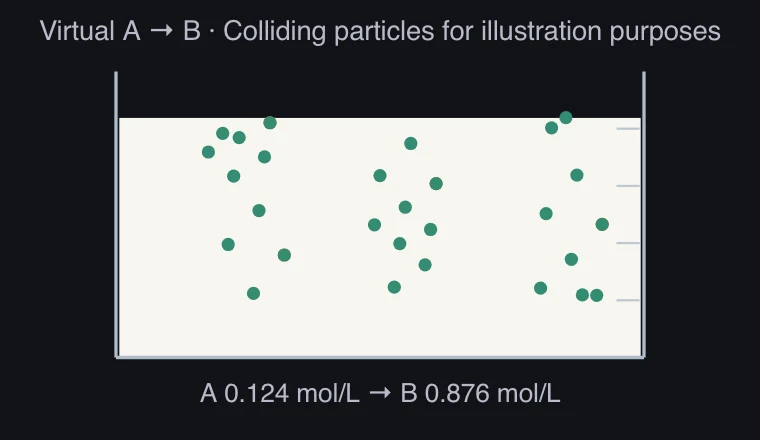
Reaction rates and rate constants
The rate of reaction is the change in concentration per unit of time. We will examine the effect where a decrease in concentration leads to a change in the rate, and the effect where temperature changes the rate constant.
Read the concept →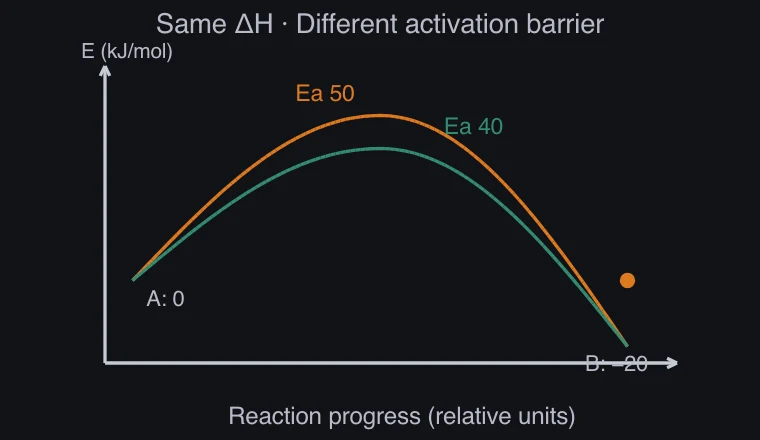
Catalysts and activation energy
The catalyst provides an alternative reaction pathway, thereby accelerating the reaction; however, it does not change the equilibrium constant at the same temperature.
Read the concept →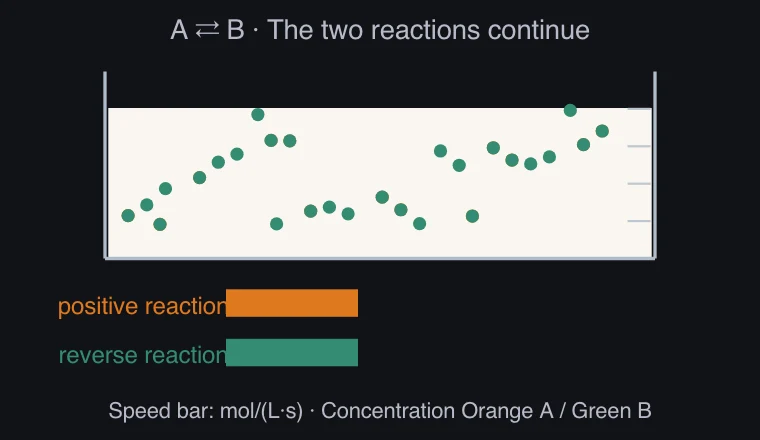
Dynamic equilibrium and equilibrium constants
In dynamic equilibrium, forward and reverse reactions continue simultaneously, resulting in equal rates. This does not mean that molecular-level reactions stop when the concentration is constant.
Read the concept →thermochemistry

Heating curves and latent heat
Energy supplied while heating a substance can raise its temperature or change its phase. The flat part of a phase-change curve cannot be explained using the specific-heat equation alone.
Read the concept →
Calorimetry and reaction enthalpy
The calorimeter estimates heat transfer based on temperature changes. It is necessary to differentiate between the heat produced by a reaction and the heat received by the solution and the container.
Read the concept →electrochemistry
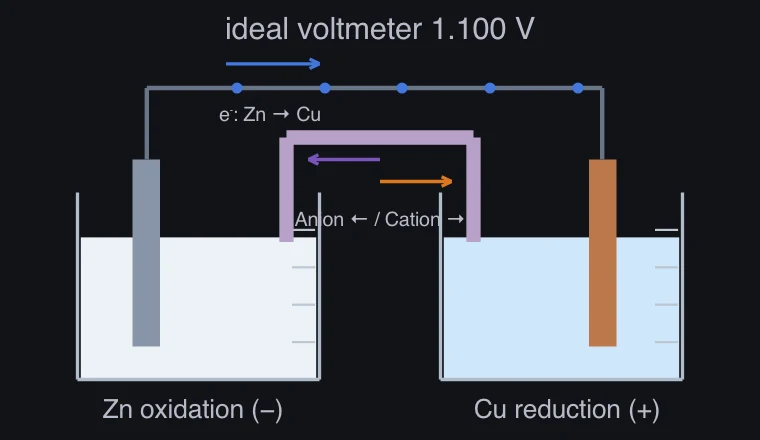
Daniell cells and redox reactions
A Daniell cell supplies electrical energy through a spontaneous redox reaction. Electrons travel through the external circuit, while ions move through the solutions and salt bridge.
Read the concept →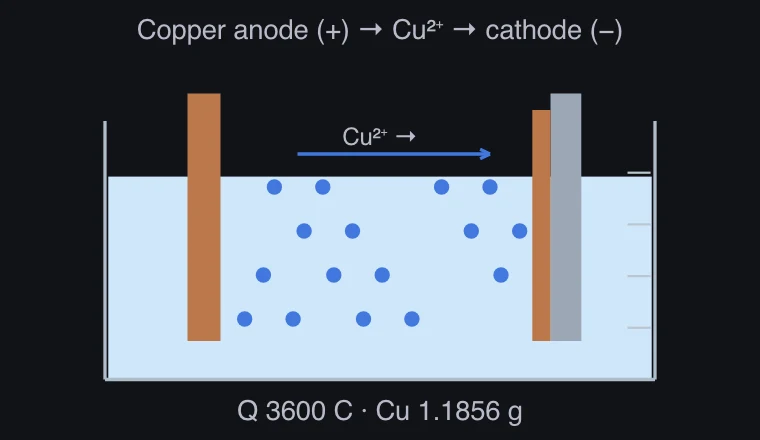
Electroplating and Faraday’s law
Electroplating involves using an external power source to reduce metal ions and deposit them on the surface. The amount of deposition depends not only on the current, but also on the duration of the current flow.
Read the concept →