
CONCEPTS / EARTH
Earth science concepts
Explore the principles, key relationships, examples, and model limits in earth science, then test them in related experiments. These 20 concepts connect to 20 experiments.
All earth science experiments →Geology/Earth interior

Plate boundaries and crustal deformation
The distribution of terrain and earthquakes changes depending on how plates move – whether they diverge, converge, or offset. This considers both the type of boundaries and the properties of the plates themselves.
Read the concept →
Seismic waves and epicentral distance
The difference in P-wave and S-wave arrival times estimates distance to the hypocenter. Account for focal depth, then combine information from several stations.
Read the concept →
Relative ages of rock layers
Overlapping layers and cross-cutting structures reveal the relative order of geological events. Relative order must be distinguished from absolute age.
Read the concept →
Magma cooling and crystal texture
Crystalline structures arise as a result of both the formation of new crystals and the growth of existing crystals. The cooling rate determines the time available for these two processes to occur.
Read the concept →
Fossil evidence for continental drift
Matching fossil distributions on widely separated continents provide evidence of past connections. Compare several independent lines of evidence rather than a coastline alone.
Read the concept →Atmosphere/Weather
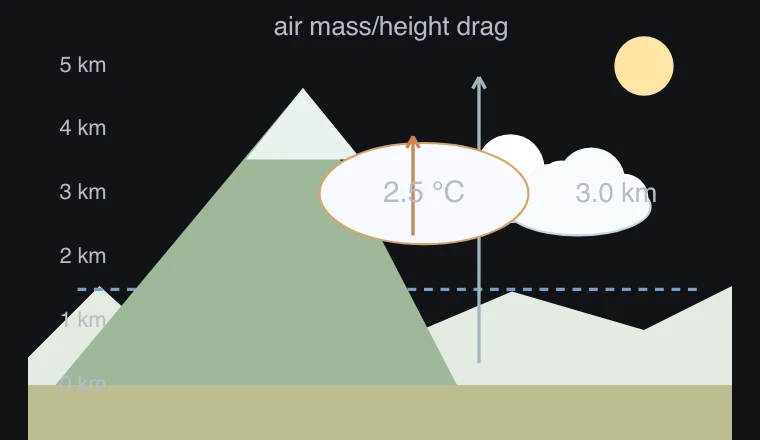
Rising air, cooling, and clouds
If the air rises and expands, it can cool, and if it reaches its dew point, condensation may begin. The difference between the temperature and the dew point is an indicator of the base of clouds.
Read the concept →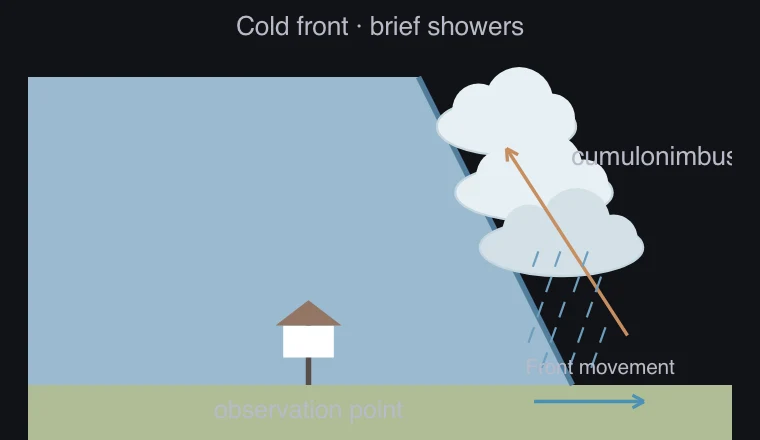
Weather fronts and weather changes
A weather front is a boundary between air masses with different properties. As a front moves, its spatial structure appears at a station as weather changes over time.
Read the concept →
Land and sea breezes and differential heating
The difference in temperature between land and the sea influences the direction of winds along the coast. There is also a time difference between heating of the surface and the flow of air.
Read the concept →Astronomy/Space

Moon phases and viewing geometry
Moon phases depend on how much of the sunlit hemisphere we see from Earth. Ordinary phase changes are not caused by Earth’s shadow.
Read the concept →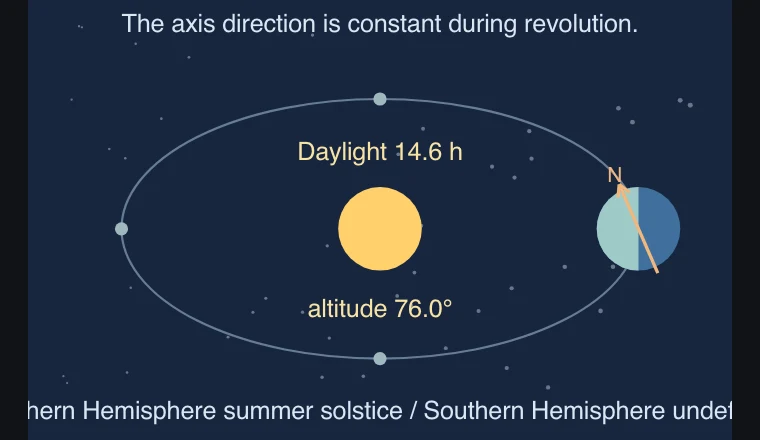
Axial tilt and seasons
The primary cause of seasons is the difference in solar altitude and daylight hours, which arises from the tilt of the Earth’s axis of rotation. In both hemispheres, opposite seasons are observed.
Read the concept →
Solar and lunar eclipses and orbital inclination
Eclipses occur when the Sun, Earth, and Moon align appropriately. Because the lunar orbit is tilted, eclipses do not occur at every new or full moon.
Read the concept →
Kepler’s laws and elliptical orbits
The ideal orbit of a planet is an ellipse with the Sun as one focus. We examine the relationship between the area swept by an orbit at a given time and the size of the orbit itself.
Read the concept →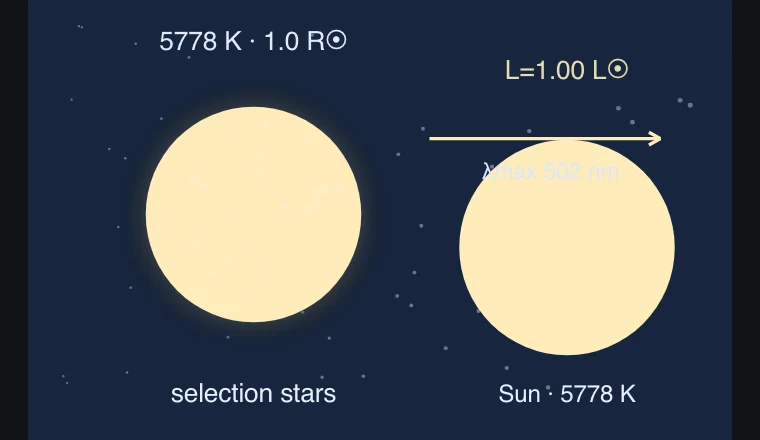
Stellar luminosity and apparent brightness
Luminosity is the rate at which a star emits energy, while apparent brightness is the amount observed by the observer. The size, temperature, and observation distance of a star all play different roles.
Read the concept →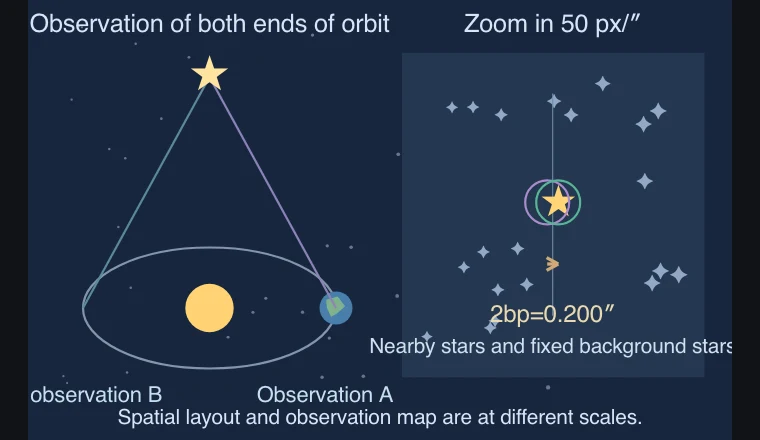
Annual parallax and stellar distances
As Earth orbits the Sun, a nearby star appears to shift relative to background stars. Standard annual parallax is half the total angular shift between the two observations.
Read the concept →Ocean/Climate/Water Cycle

Temperature, salinity, and seawater density
Seawater density is influenced by both temperature and salinity. The effects of colder water and saltier water can either complement or counteract each other.
Read the concept →
Trade winds, upwelling, and El Niño
The winds in the tropical Pacific influence the distribution of warm surface waters and cold deep waters. El Niño is a fluctuation linked between the ocean and the atmosphere.
Read the concept →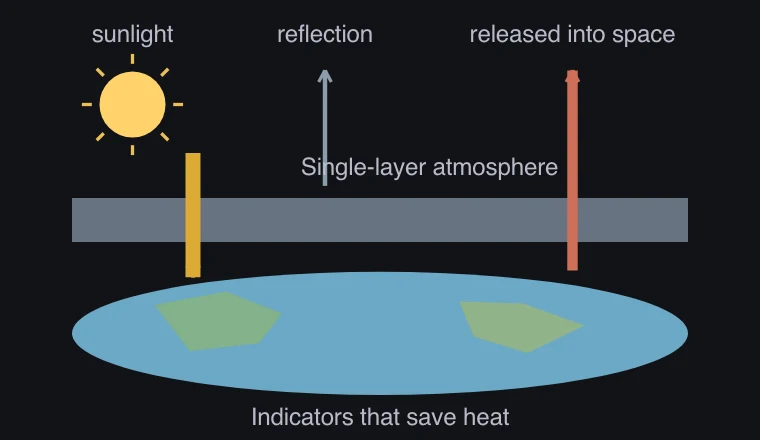
Radiative equilibrium and the greenhouse effect
The Earth’s energy balance is explained by the balance between the energy absorbed from solar radiation and the energy radiated into space. The greenhouse effect is not a process of energy generation.
Read the concept →
Urban water cycles and water balance
Precipitation is partitioned into runoff, infiltration, evapotranspiration, and changes in storage. Urban impervious surfaces alter water pathways and their distribution over time.
Read the concept →
Groundwater flow and contaminant transport
Groundwater flows from higher to lower hydraulic head. Flow through the full cross section of a layer and the speed of water within its pores are different quantities.
Read the concept →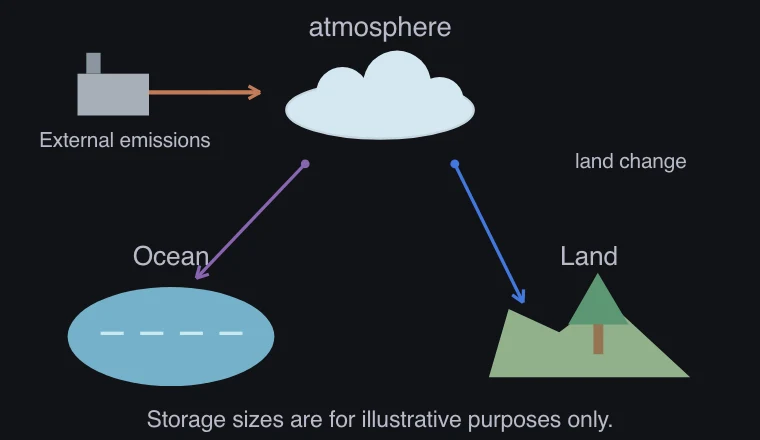
Carbon reservoirs and carbon balance
Carbon uptake moves carbon into another reservoir. Distinguish transfers within the model from emissions added from outside it.
Read the concept →