
CONCEPTS / ENGINEERING
Mechanical Engineering concepts
Explore the principles, key relationships, examples, and model limits in mechanical engineering, then test them in related experiments. These 12 concepts connect to 12 experiments.
All mechanical engineering experiments →Machines and forces

Levers and torque equilibrium
Torque depends on both force magnitude and the distance from the rotation axis to the force’s line of action. Compare lever equilibrium with the direction of torque included.
Read the concept →
Pulleys and mechanical advantage
An ideal pulley reduces the force required at the cost of pulling a greater length of rope. Mechanical advantage does not provide an energy gain.
Read the concept →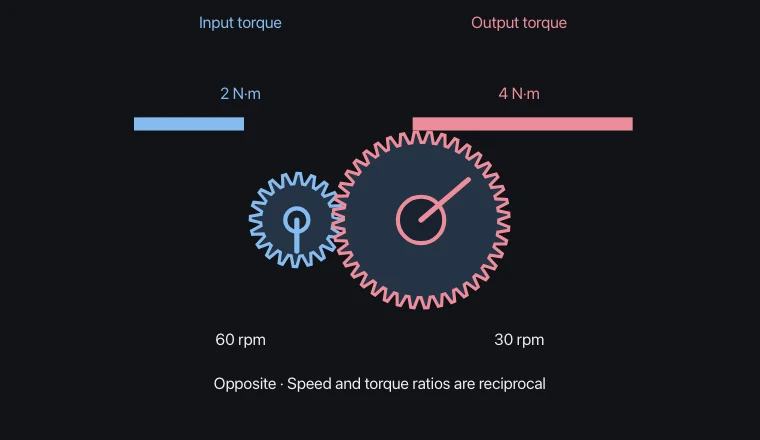
Gear ratios, speed, and torque
The tooth-count ratio of meshing gears determines their rotational-speed ratio. In ideal speed reduction, the decrease in speed allows a corresponding increase in torque.
Read the concept →
Pascal’s principle and hydraulic systems
Hydraulic devices convert force by utilizing the property of maintaining the same pressure change. The distance over which movement occurs decreases on the side that achieves greater force.
Read the concept →Structures and materials

Trusses and member tension and compression
Trusses are structures consisting of members connected in triangles, which distribute loads. Whether each member is being pulled or pushed can be determined by analyzing the forces at the joints.
Read the concept →
Beam bending and deflection
Beam deflection depends strongly on length and cross-sectional shape as well as load. Even with the same amount of material, bending stiffness changes with orientation.
Read the concept →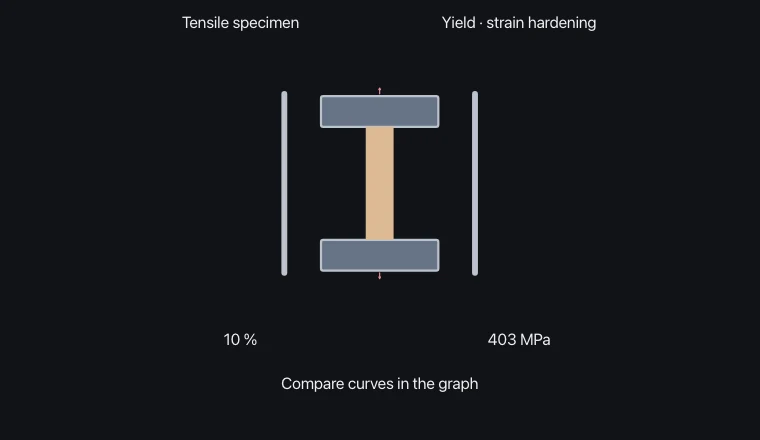
Stress, strain, and the elastic limit
Stress is the value obtained by dividing force by the cross-sectional area, while strain is the relative change in length compared to the original length. This allows for comparison of materials based on their force-elongation graphs.
Read the concept →Stability and control
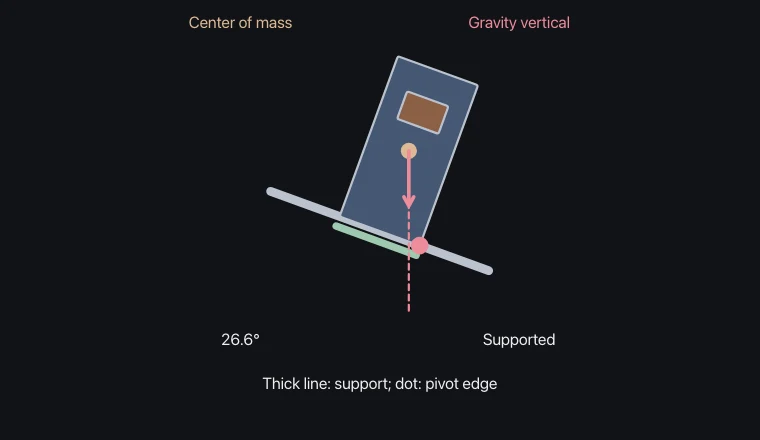
Center of mass and tipping
If the downward line of action through an object’s center of mass falls outside its support region, a tipping torque can arise.
Read the concept →
Spring oscillations and damping
A spring’s restoring force acts toward equilibrium, while damping reduces mechanical energy. More damping does not always give the fastest return to equilibrium.
Read the concept →
PID control and setpoint tracking
PID control responds to the difference between the target value and the current state. It evaluates not only the speed of reaching the target, but also vibrations, overshoot, and steady-state error.
Read the concept →Fluids and flight
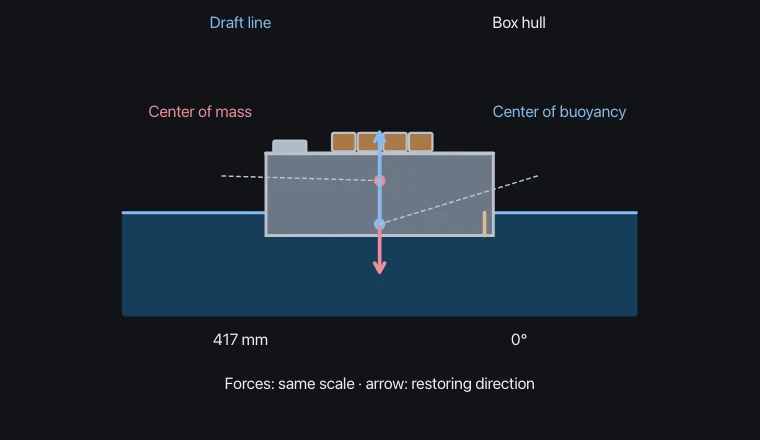
Buoyancy and ship draft
Objects floating in water experience a buoyancy force equal to their weight, and are thus in equilibrium. As the load increases, they must displace more water.
Read the concept →
Wing lift and angle of attack
The lift generated by a wing is explained by the distribution of air pressure and the change in the movement of airflow. As the angle of attack increases, the lift does not continue to increase indefinitely.
Read the concept →